


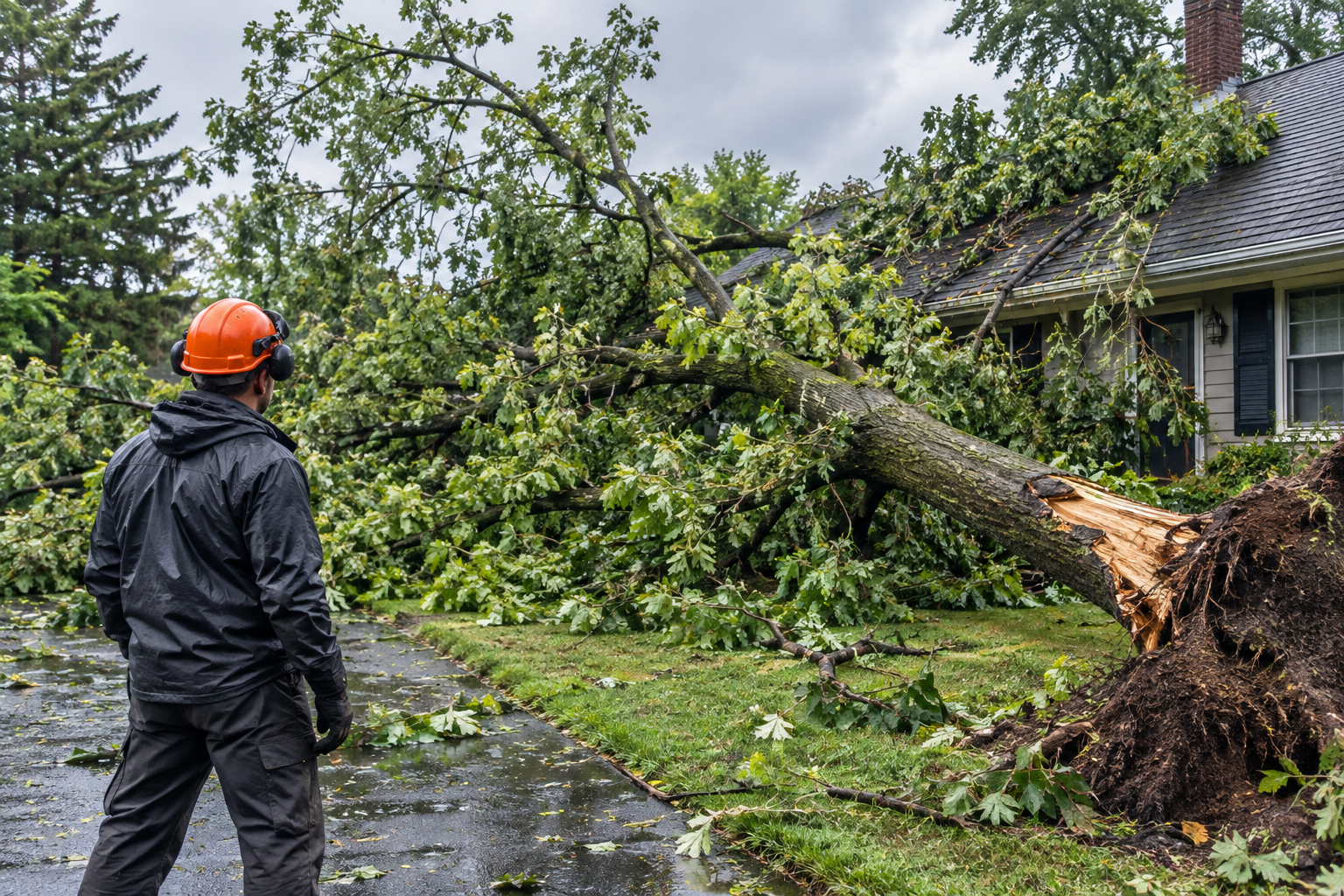
A severe storm can change the condition of your property in a matter of minutes. High winds, heavy rain, ice, and snow can cause large trees to split, uproot, or fall unexpectedly. When a tree comes down, the first priority is not cleanup, it is making sure everyone stays safe.
Knowing what to do after a tree falls can help you avoid additional damage and determine when it is time to call a professional. For homeowners dealing with storm damage, emergency tree service in Buffalo, NY can help address dangerous fallen trees and branches before they create further problems.
1. Stay Away From the Fallen Tree
Your first reaction may be to walk outside and see what happened. However, a fallen tree can create hazards that are not immediately visible.
Branches may still be under tension and can move unexpectedly. Broken limbs may be hanging above the area, while damaged roots can leave nearby trees unstable.
Keep children and pets away from the affected area and avoid standing underneath partially broken branches.
If the tree has fallen against a structure, fence, vehicle, or another tree, do not attempt to move it yourself.
2. Check for Downed Power Lines
One of the most important things to look for after a storm is a damaged utility line.
A fallen tree or large branch can bring down electrical wires or pull them from their normal position. Even if a wire does not appear to be sparking, it should be treated as dangerous.
Never touch:
- Downed electrical wires
- Trees or branches touching power lines
- Fences or metal objects that may be energized
- Equipment that is in contact with a fallen line
Keep everyone away from the area and contact the appropriate utility company or emergency services when necessary.
This is one situation where attempting DIY tree removal can be extremely dangerous.
3. Determine Whether Your Home Has Been Damaged
Once you are safely away from the tree, look at the surrounding property from a safe location.
Check for visible damage to:
- Roofs
- Gutters
- Windows
- Siding
- Garages
- Fences
- Vehicles
- Driveways
- Other structures
A fallen tree can sometimes cause damage that is not obvious from ground level. For example, a large branch may have damaged a roof beneath the canopy.
If you notice structural damage, contact the appropriate professional before attempting to move the tree.
4. Do Not Start Cutting a Large Fallen Tree Yourself
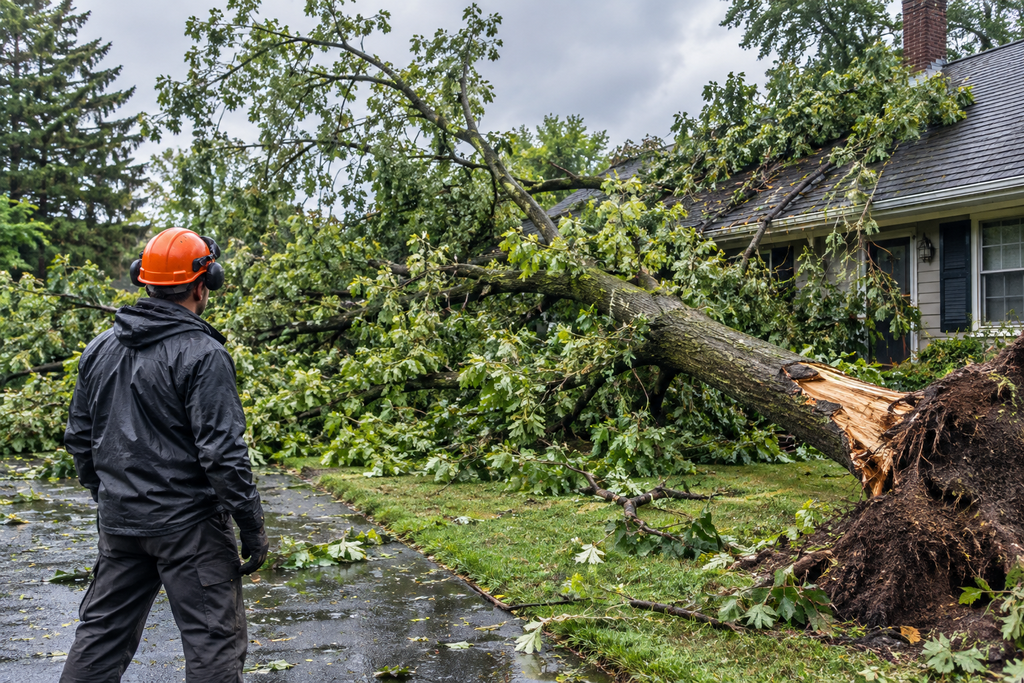
A chainsaw may seem like the obvious solution, but storm-damaged trees can behave differently from ordinary trees.
When a tree falls, sections of the trunk and branches can become compressed or placed under significant tension. Cutting the wrong section can cause the wood to move, roll, split, or spring unexpectedly.
Large trees also weigh considerably more than they appear to.
For these reasons, homeowners should be especially cautious about attempting to cut apart large storm-damaged trees without the appropriate experience and equipment.
Professional emergency tree removal allows trained workers to evaluate the situation and determine how the tree can be safely dismantled and removed.
5. Look for Other Damaged Trees
A fallen tree may not be the only problem after a major storm.
Strong winds can weaken nearby trees and branches without immediately bringing them down. Walk around the property only when it is safe and look from a distance for signs such as:
- Newly leaning trees
- Split trunks
- Large broken branches
- Hanging limbs
- Exposed roots
- Cracked branches
- Trees that have shifted in the ground
A tree that survived the initial storm may still pose a hazard if its structure has been compromised.
If you notice significant damage, consider having the affected trees professionally evaluated.
6. Photograph the Damage
If conditions are safe, take photographs of the fallen tree and any visible property damage.
Photos can be useful for documenting what happened and may be helpful when communicating with your insurance company.
Try to capture:
- The entire fallen tree
- The damaged trunk
- Broken branches
- Property damage
- Nearby structures
- The location where the tree originally stood
Do not put yourself in an unsafe position just to obtain a photograph.
7. Contact Your Insurance Company if Property Was Damaged
If the fallen tree damaged your home, garage, vehicle, or another insured structure, contact your insurance provider and ask about the appropriate next steps.
Insurance coverage for storm-damaged trees can vary depending on the circumstances and the specific policy.
Keep records of the damage, photographs, estimates, invoices, and other relevant documentation.
Your insurance provider can explain what information or documentation may be required for your particular claim.
8. Call a Professional Tree Service
Once immediate safety concerns have been addressed, the next step is arranging professional removal when necessary.
If a large tree is blocking a driveway, resting on a structure, creating a hazard, or preventing access to part of your property, professional assistance can help get the situation under control.
Homeowners searching for emergency tree service Buffalo NY may need help with more than simply cutting up a fallen tree. Storm response can involve removing dangerous branches, clearing fallen trees, assessing additional hazards, and cleaning up debris.
A professional tree service can evaluate the site and determine the safest approach for removing the damaged tree.
When Is a Fallen Tree an Emergency?
Not every fallen tree requires immediate emergency response.
For example, a small tree that has fallen entirely into an open area away from structures, people, and utilities may be something that can be scheduled for routine removal.
The situation becomes more urgent when the tree:
- Has damaged a house or other structure
- Is blocking a driveway or important access route
- Is resting on a vehicle
- Is near electrical lines
- Has left large branches hanging overhead
- Is partially suspended in another tree
- Is creating a hazard for people or vehicles
- Has caused another tree to become unstable
When these conditions are present, avoid unnecessary contact with the damaged tree and seek professional assistance.
Buffalo Storms Can Put Trees Under Significant Stress
Buffalo properties experience a variety of weather conditions throughout the year. Heavy snow, ice, strong winds, thunderstorms, and rapid changes in weather can all affect trees.
A tree that appears healthy before a storm may still have hidden structural weaknesses. Existing decay, damaged roots, weak branch unions, or previous storm damage can increase the likelihood of failure.
This is why it is useful to inspect trees periodically rather than waiting until a storm creates a problem.
Regular tree trimming and pruning services can also help address certain dead, weak, or poorly positioned branches before they become larger concerns.
What About a Tree That Fell on Its Own?
Sometimes a tree falls even though there was no obvious warning.
A tree may have internal decay, root problems, disease, or structural weaknesses that are difficult to identify from the ground.
If a tree has fallen unexpectedly, it can be worthwhile to examine nearby trees as well. Similar conditions may affect other trees on the property.
A professional assessment can help identify obvious hazards and determine whether additional work is needed.
What Not to Do After a Storm
Knowing what not to do can be just as important as knowing what to do.
Avoid:
- Cutting trees near power lines
- Climbing onto fallen trees
- Walking underneath hanging branches
- Operating a chainsaw without proper experience
- Pulling branches that appear to be under tension
- Driving over fallen branches or debris
- Allowing children or pets near unstable trees
- Assuming a partially fallen tree is safe because it has stopped moving
Storm-damaged trees can contain significant stored energy. A branch or trunk section that looks stationary can move when pressure is released.
How Professional Emergency Tree Removal Works
When a tree requires immediate attention, a professional tree crew will first evaluate the site and identify potential hazards.
The removal process may involve determining:
- Where the tree is putting pressure on structures or other objects
- Which branches or trunk sections are unstable
- Whether utility lines are involved
- How the tree can be safely dismantled
- Where sections can be lowered or placed
- How remaining debris can be cleared
The exact approach depends on the size and position of the tree, the surrounding property, and the extent of the storm damage.
Preventing Future Storm Problems
You cannot prevent every storm-related tree failure, but regular tree care can help identify potential problems before severe weather arrives.
Consider having trees evaluated when you notice:
- Dead or declining branches
- Cracks in major limbs
- Trunk cavities
- Significant decay
- Root damage
- A new or worsening lean
- Branches growing toward structures
Routine maintenance does not guarantee that a tree will survive every storm, but identifying structural concerns early can help you make informed decisions about pruning, monitoring, or removal.
Final Thoughts
A fallen tree after a storm can be stressful, especially when it blocks your driveway, damages your property, or creates an immediate safety concern. The most important thing is to avoid rushing into cleanup before the area has been assessed.
Stay away from unstable trees, watch for downed utility lines, document visible damage, and contact the appropriate professionals when necessary.
If you need emergency tree service in Buffalo, NY, Evergreen Tree Service can help with storm-damaged and fallen trees on residential and commercial properties. Professional emergency tree removal can help safely address hazardous trees and restore access to affected areas.
For tree emergencies or storm-related tree damage, contact Evergreen Tree Service at (716) 451-3716 to discuss the situation and request professional assistance.